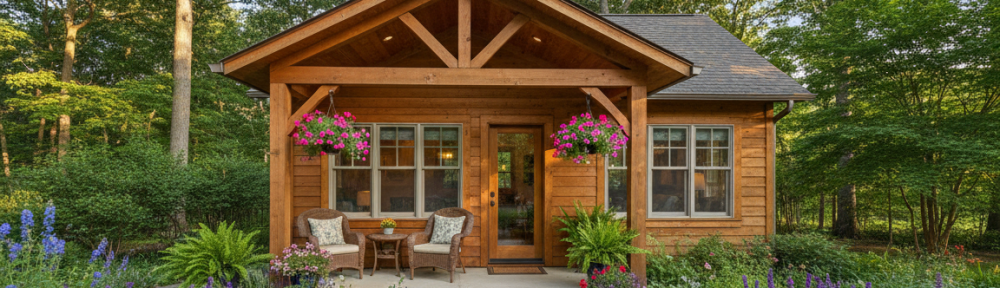
In Renton’s Ballard neighborhood, a local family transformed an underused yard into a profitable rental asset. By building a backyard cottage behind their Craftsman home, turning a once-idle space into a steady source of income.
See Renton Accessory Dwelling Unit Builders
That detached accessory dwelling unit addressed several problems. It provided a long-term home for a young teacher and made room for weekend guests. In addition, this small guest house improved parking and privacy while also boosting the property’s value.
This article covers the essential points of backyard ADU construction. It is useful for anyone planning adding a backyard cottage. We explain what makes an ADU legally permanent and self-contained, and we also explain why a planned cooking area is essential for classification.
Detached ADUs (DADUs) are explained alongside attached and junior ADUs. This guide reviews local code details, including Renton’s setbacks and required separations. Height limits and fire-rating rules also shape backyard cottage plans.
We dive into permits, utility hookups, and the differences between converting a garage and building a new guest house. If you are aiming for rental income, multigenerational living, or a home office, this guide provides a starting point. It prepares you for zoning and cost considerations.
Is A Backyard Cottage Right For Your Property? Benefits, Uses, And Considerations
Building a backyard guest house can reshape how your property is used. A carefully planned unit can support multigenerational living, generate rental income, and create flexibility for home offices or guest space. It is important to research local regulations and lot limits early so you can avoid costly delays and expenses.
Popular Uses For Backyard Cottages
Many homeowners build a backyard guest house to care for a family member while still maintaining separate living spaces. Others want passive rental income to offset mortgage payments. Some use these cottages into private home offices or short-term rentals for visitors seeking local experiences.
Pros And Cons Of Building A Backyard Cottage
Key advantages include increased property value, added income, and more affordable housing on existing land. A strong design can protect tenant privacy through orientation, landscaping, and separate entrances. That can create more privacy than dense apartment living.
The drawbacks include upfront costs and the complexity of permits. Poor lot grading and zoning restrictions can also slow construction. Those constraints may affect resale value or impose size limits that reduce the unit’s usefulness.
When A Backyard Cottage Is A Good Fit
A backyard cottage tends to work well when the lot meets zoning setbacks and has at least a 5′ separation from the main house; 10′ is stronger for fire safety. Lots with high rankings for width and coverage usually make construction more feasible and cost-effective. Careful design choices should address site constraints to protect neighbor privacy and support resale value.
Before moving forward, review local codes in your area. Regulations vary across the country and can affect size, allowable uses, and the eventual resale of the unit. Good design and planning help ensure the project meets your needs without unexpected issues.
Understanding Backyard Cottage Construction
Your choice of construction method has a major effect on cost, timeline, and site requirements. Options include stick-framed builds, modular factory-built units, and prefabricated structural insulated panels (SIPs). Stick-framed projects offer strong design flexibility, while modular units arrive mostly finished and mainly require only a foundation. SIP systems, by contrast, can provide quick enclosure and high thermal performance through crane-assisted panel placement.
Early project work can be almost as involved as that of a full-sized home. It may include survey work, soils reports, civil and structural engineering, and arborist assessments for trees. Front-end feasibility work can help avoid surprises and keep budgets under control.
Construction timelines vary by method. Custom backyard cottages often take six to twelve months from permit to completion, while prefab or modular approaches can shorten that to three to six months. Garage conversions are usually quicker and less expensive, but they still require permits and upgrades for plumbing, electrical, and egress.
Permits and utility hookups are essential to project success. Plans should address water, sewer or septic, power, and gas service. Strong coordination with the local building department is important if you want to avoid delays and expensive rework.
Site-specific conditions can raise complexity. Challenges such as steep slopes, drainage problems, and hidden infrastructure increase labor needs and mitigation costs. As a result, converting an existing garage remains a popular option when yard space is limited.
Bring in experienced backyard cottage contractors early in the process. A licensed architect can help ensure the design aligns with code and zoning, which may reduce change orders. Skilled contractors familiar with local rules and multiple construction methods can help manage budgets and timelines.
| Type Of Construction | Typical Project Timeline | Estimated Cost Range (US) | Primary Advantages | Primary Drawbacks |
|---|---|---|---|---|
| Custom stick-framed build | 6–12 months | About $120,000–$300,000+ | Flexible design choices and easy on-site adjustments | Longer timeline and higher labor costs |
| Factory-built / modular | 3–6 months | About $80,000–$200,000 | Quicker setup with strong factory quality control | Delivery constraints and required site/foundation preparation |
| SIPs (prefab panels) | Typically 3–7 months | Roughly $100,000–$220,000 | Excellent insulation, quick enclosure | Needs a crane and experienced installers |
| Garage conversion | 2–6 months | About $40,000–$120,000 | Lower cost and reuse of an existing structure | Limited layout options, possible structural upgrades |
While planning a backyard cottage, balance budget, timeline, and site realities. Choose contractors with local code knowledge, prior ADU experience, and a clear scheduling process. Bringing in architects and contractors early can minimize costly mistakes during construction.
Backyard Cottage Zoning Regulations And Permits
Before moving ahead with your project, it is important to understand local accessory dwelling unit regulations. The rules for backyard cottages vary across cities and states. They define allowed unit types, size limits, setbacks, height rules, and required studies. Doing that research early can prevent surprises and help keep the project moving.
Labels such as ADU, DADU, and JADU establish the baseline for what you may build. An ADU generally includes full living amenities such as a kitchen, bathroom, and sleeping area. DADUs, or detached backyard cottages, must be separate from the main house, often by at least 5 feet, though 10 feet is better. JADUs are located within the existing home and are usually smaller, often under about 500 square feet.
Zoning constraints often include minimum lot sizes, widths, and depths. In cities like Renton, a minimum lot size of around 3,200 square feet, a 25-foot minimum width, and a depth of roughly 70 feet may apply. Exceptions may apply on larger lots. Height limits vary with lot width and roof form. Narrow lots may face stricter base heights, with possible increases for pitched roofs or green-building bonuses. Rear-yard intrusion can sometimes produce limited height exceptions, though allowable heights near property lines may still be reduced.
The permit process starts with accurate site data. GIS mapping and a topographic survey can help reveal underground utilities. You may also need soils or geotechnical reports, infiltration studies when stormwater matters, arborist reports for significant trees, and structural or civil engineering documents when required.
Beginning a Preliminary Application Report early can help identify zoning conflicts. PAR processing can take around two months in many jurisdictions. A thorough PAR reveals missing studies and clarifies whether the design aligns with permit requirements. Wrong or incomplete documentation can slow approval and add cost.
Recent state and local reforms have changed timelines and sizing rules in many areas. Some jurisdictions now allow larger ADU footprints, reduced parking requirements, and faster review windows, sometimes targeting a 60-day approval cycle. Even so, building permits, inspections, and utility connections remain necessary before occupancy.
Partnering with a permit consultant or an architect who knows local codes can streamline filing. Clear site documentation and an organized submission can improve the odds of timely approvals for backyard cottage permits and ADU permits, while reducing back-and-forth with planning departments.
Key Backyard Cottage Zoning Regulations
Backyard cottage zoning differs across cities. Many areas, including places like Renton, apply lot coverage caps of around 35% in single-family zones. To estimate what space remains, use a formula like: (Lot Size × allowable %) − existing coverage. For smaller lots under 5,000 square feet, the rule is often 1,000 square feet plus 15% of the lot area.
Municipal rules count the ground-level footprint of all structures, including the house, garage, and sheds. Structures that have been demolished do not erase prior coverage unless the permit history clearly supports that change. Because of this, those rules directly shape the design and size of backyard ADUs.
Setbacks and separations are especially important. Many codes require a 5-foot gap from the main house and side lot lines, unless an easement applies. Rear-yard rules may allow a detached unit to occupy up to 60% of the space, but that depends on site constraints and tree protection. Alley lots can follow special rules, with rear setbacks measured from the alley centerline and, in some cases, allowed to be zero feet.
The size limits for detached units vary from city to city. Some places cap ADUs at 800 square feet, while others allow larger units. In many locations, the primary dwelling must remain on the lot to preserve saleability. Adding square footage may increase property taxes and insurance, those costs should be part of the planning process.
Statewide reforms have made ADUs easier in many places by reducing parking demands, expanding size allowances, and speeding up review times. However, each city keeps its own rules. Because of that, you should confirm backyard cottage zoning with the local planning department before submitting plans.
For effective planning, calculate lot coverage, confirm setback and entrance rules, and verify size and saleability requirements. These steps help you design a compliant backyard cottage while reducing the chance of expensive permitting changes.
Site Feasibility: Lot Coverage, Setbacks, And Utilities
Reviewing site feasibility for a backyard cottage requires a close look at lot size, lot shape, and existing structures. Small lots under 3,200 square feet face stronger constraints, while larger lots usually provide more flexibility. Early lot coverage calculations reveal how much buildable area remains after the main house, driveways, patios, and other improvements are counted.
Available Lot Coverage Calculations
The first step is applying the local coverage standard. Many jurisdictions allow 35% maximum coverage or use a formula such as 1,000 square feet plus 15% for lots under 5,000 square feet. A common calculation is: (Lot area × 0.35) − existing impervious area = available ground-floor footprint.
Lot grading tiers help set realistic expectations. Narrow lots under 30 feet wide may support a single-story cottage with a loft. Lots with roughly 400 square feet of remaining coverage may fit a compact two-story structure. Larger allowances of 500 square feet or more can support up to 1,000 square feet of ADU living area or even space for an attached garage.
Rear Yard Rules, Setbacks, And The Usable Building Envelope
Review setbacks early. Minimums often include 5 feet from the main residence and 5 feet from side lot lines. Rear setbacks commonly follow the smaller of 25 feet or 20% of lot depth, with minimums near 10 feet on smaller lots.
Rear yard regulations often allow a cottage to occupy up to 60% of that area. Alley lots measure rear yard from the alley centerline, which may create more usable space but can also introduce utility or access challenges. A 0-foot alley setback may be allowed for foundations, though a 1.5-foot clear space is often recommended for drainage and maintenance.
Site Constraints, Utilities, And Stormwater
Address utility planning before design. Sewer connections should be scoped with camera inspections and elevation checks so you can avoid unexpected pump requirements. If gravity flow is favorable, tie-ins beyond the main house may be preferable. Surveys and utility locates can help prevent expensive excavation surprises.
Stormwater rules often depend on the total new impervious surface. Adding less than 750 square feet of new impervious area often triggers only minimal controls. New surfaces from 750 to 1,500 square feet usually require approved off-site discharge or a mix of bioretention and drywell measures. Projects beyond 1,500 square feet commonly require on-site retention or infiltration supported by testing and civil engineering.
Significant trees and critical areas can reduce buildable area and require buffers. Slopes, landslide zones, and buried culverts may make a site infeasible or add major costs for drainage and shoring. Long driveways or remote parcels may also trigger fire sprinkler requirements when access limits emergency response.
Create a feasibility checklist that covers lot coverage math, setback calculations, utility hookups, impervious-surface rules, and topographic conditions. Early coordination with planning staff and a civil engineer can clarify stormwater requirements and reduce the risk of last-minute redesigns.
Understanding The Cost Of Building A Backyard Cottage
Estimating the cost of a backyard cottage requires looking at several build types. Prefab and modular units often fall between $100,000 and $250,000. Garage conversions commonly range from $80,000 to $150,000. Custom detached site-built cottages may cost from $150,000 to $400,000 or more in high-cost construction markets.
Before work begins, soft costs can materially affect the budget. These may include site surveys, topography, geotechnical work, arborist reports, structural and civil engineering, and environmental testing. Some cities also require a Preliminary Application Report, which can lengthen the timeline and increase fees.
Existing site conditions can add specialized work and extra costs. Utility hookups, sewer capacity charges, and sewer pump installations may be necessary when gravity drainage is not feasible. Stormwater measures such as drywells or bioretention systems are often required once impervious-area thresholds are exceeded.
Lots with slopes often require shoring, engineered foundations, and more involved grading, all of which raise costs. Tree mitigation and required plantings can add further expense. Driveway extensions, curb cuts for garage access, and sprinkler upgrades for fire access are also common items that increase total construction cost.
Ownership costs over time should also be part of ADU cost estimates. Adding a secondary unit may increase assessed value, which can lead to higher property taxes and insurance premiums. If the unit is rented, landlord insurance, licensing, or periodic inspections may also create ongoing fees.
Financing choices can influence both project timing and total cost. Prefab ADUs often take three to six months from permit to completion, while custom builds more commonly take six to twelve months. Permit review timing varies by jurisdiction and can add months to the overall schedule.
| ADU Type | Typical Cost Range | Frequent Extra Costs |
|---|---|---|
| Prefab / Modular | About $100,000 – $250,000 | Site prep, utility hookups, permits, delivery/crane |
| Converted garage unit | About $80,000 – $150,000 | Electrical/plumbing upgrades, structural reinforcement, permits |
| Detached custom ADU | About $150,000 – $400,000 | Geotech, surveys, landscaping, engineered foundation work, and stormwater mitigation |
During budget planning, include realistic contingencies for soft costs and site-driven expenses in your ADU cost estimates. Early spending on consultants and accurate site studies can reduce surprises and give you a clearer view of the true cost of building a backyard cottage.
Design And Construction Options For Backyard Cottages
The right backyard cottage design choice starts with understanding site realities and lifestyle goals. Small lots demand efficient layouts, while sloped lots may require terracing or partial walkouts. Early survey work and utility planning can save both time and money during construction.
If space is limited, think vertically. Sleeping lofts and open floor plans can maximize usable space without increasing square footage. High ceilings and larger windows can make the interior feel more spacious. Separate entrances may also improve privacy for guests or renters in a backyard guest house design.
Design Approaches For Small-Footprint Living
Built-in storage and multipurpose furniture to get more out of limited square footage. Compact kitchens with efficient appliances and combined living-dining areas can preserve circulation. Windows should be placed to maximize natural light while screens or landscaping help protect neighbor privacy.
Early energy planning matters. Strong insulation, high-performance windows, tankless water heaters, and solar-ready roofs can cut operating costs. Energy-efficient design may also strengthen rental appeal and long-term resale value.
Comparing Construction Methods: Stick-Built, Prefab Panels, And Modular
Stick-frame construction offers flexibility for on-site changes, making it useful on irregular lots and for custom carpentry. It also makes it easier to adapt when unexpected soil or utility issues appear without requiring a major redesign.
SIP-based ADU systems can provide faster build times and stronger insulation. Panels arrive ready to place and often require a crane or boom for installation. A SIPs ADU approach can also reduce air leakage and heating loads compared with conventional framing.
Modular factory-built units arrive mostly finished, with foundations and utilities prepared in advance. This method reduces the number of on-site construction days and can improve quality control even when weather causes delays.
Garage, Rooftop Deck, And Terraced Site Considerations
Carriage-house designs place living space above a detached garage when setbacks and lot coverage allow it. Out-swing garage doors can preserve lower garage clearances and help support a taller living level above.
Rooftop deck features can add outdoor living area without increasing the footprint. Before designing one, verify setback compliance and privacy obligations. Screening, planted buffers, and thoughtful orientation can help reduce direct sightlines into neighboring yards.
Sites with terracing may allow part of a unit to sit below grade, which can sometimes reduce measured floor area. Retaining walls, stepped foundations, and careful drainage are all important. It is wise to work with a geotechnical or structural engineer for safe, code-compliant solutions.
It is also important to plan for noise control, parking placement, and shared versus private outdoor areas to preserve good neighbor relations. A well-executed backyard cottage construction should blend with the main house and the street while meeting community expectations.
How To Find Contractors, Financing, And Navigate The Build Process
Start by identifying professionals who understand ADU regulations and local permit processes. Look for architects and contractors with a proven background in backyard cottage construction. Civil or structural engineers and arborists may also be necessary, especially on sites with steep slopes or protected trees. Ask for references, examples of construction documents, and sample surveys or soils reports so you can spot thorough teams.
It helps to organize the build process into stages: feasibility and survey, design and permit application, foundation and utilities, and construction. Modular and SIP builds still require on-site foundations, hoisting, and structural holdowns. The timeline may range from 3–6 months for prefab ADUs to 6–12 months for custom builds, depending on permits and site complexity.
Review financing options before making a commitment. Common choices include home equity loans, HELOCs, construction loans, and cash-out refinances. Specialty products such as RenoFi may consider after-value as part of the financing picture. Review local grants and renovation lending programs, and build a budget that includes consultant fees, permits, utility connections, stormwater mitigation, and a contingency for unexpected issues.
Full-service firms such as Renovate Builders can simplify the process by managing surveys, permit submissions, and construction oversight. When comparing firms, confirm their permitting knowledge, their experience with modular or SIP systems, and their ability to handle stormwater or fire-access challenges. For more information or to discuss a project, visit renovatebuilders.com to request a consultation and learn more about financing and build-process support.